
Your cart
Es gibt keine Artikel mehr in Ihrem Warenkorb
Tokai Gakki: The Sacred Art of Fine Japanese Lutherie in Hamamatsu
In the world of high-end electric guitars and basses, few names resonate with as much mystical fervor as Tokai Gakki. Founded in 1947 by Tadayouki Adachi in Hamamatsu, Shizuoka Prefecture – the historical cradle of the Japanese musical instrument industry –, the company first forged its unique expertise by manufacturing harmonicas and pianos. It was from 1965 onwards that Tokai applied its strict artisanal discipline to classical guitars, before revolutionizing the electric instrument market in 1968 with its legendary "Humming Bird" series, inspired by the bold contours of Mosrite.
The Golden Age of "Made in Japan" and the Myth of Perfection
The true historical turning point occurred in the mid-1970s. While the production of American giants was going through a major quality crisis, Tokai chose the opposite path: absolute fidelity to the assembly methods of the golden age of lutherie. Thanks to an exclusive technical partnership formed in 1972 with C.F. Martin & Company to manufacture the Sigma acoustic line, Tokai's luthiers assimilated the secrets of premium tonewood selection and traditional bracing.
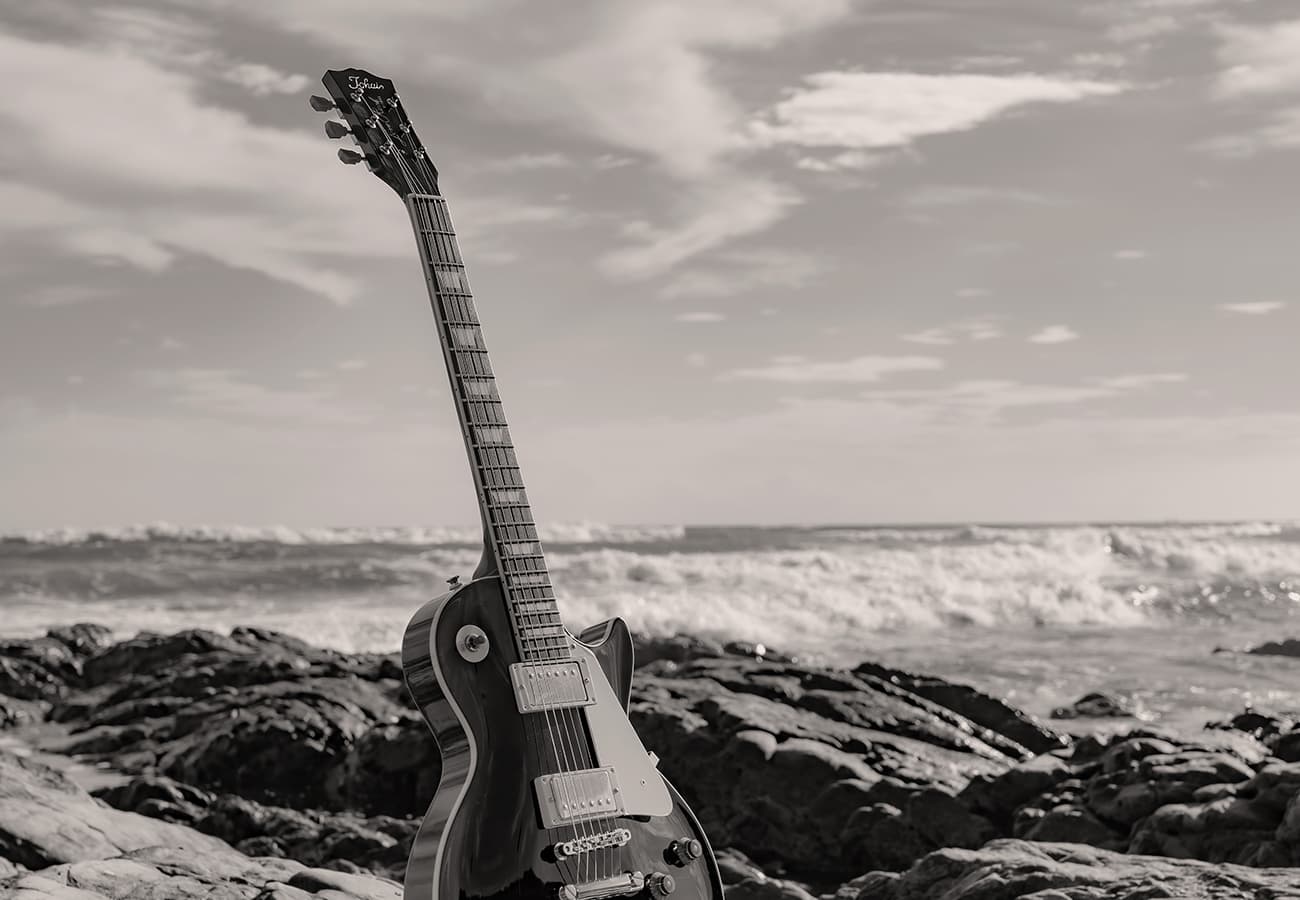
By the late 70s, Tokai launched its ultra-precise electric replicas. The Springy Sound (Stratocaster type) and Breezy Sound (Telecaster type) redefined industry standards. In 1978, the release of the Les Paul Reborn (which would become "Reborn Old" then the iconic Love Rock in 1980 due to legal reasons) stunned the guitar world. These instruments did not just replicate the aesthetics of the 1958-1959 vintage models; they captured their very soul, sustain, and dynamics by using long tenon neck joints and ultra-thin nitrocellulose finishes, outclassing the American production of that era.
Philosophy, Manufacturing Process, and Artisanal Continuity
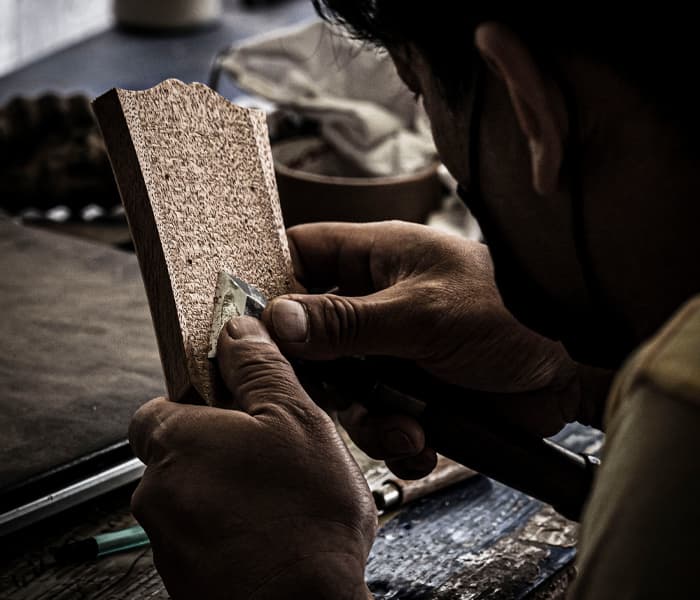
The very essence of Tokai relies on a perfect balance between precise initial CNC carving and final assembly executed entirely by hand by master luthiers. Unlike mass-produced instruments, the wood undergoes a rigorous natural drying process spanning several years. Each neck is manually fitted to its body to ensure optimal acoustic coupling.
In November 2021, Tokai Gakki opened a new chapter in its history by joining the Grace Co., Ltd. group (Unisound division), marking the end of purely family-owned management. However, the presidency remains under the leadership of Shohei Adachi, a third-generation representative of the founding family. This transition injected eco-friendly technologies while safeguarding the heart of the Hamamatsu workshop: a dedicated team of 65 artisans preserving traditional craftsmanship.
Why Tokai is the Ideal Alternative for Bacchus and Momose Enthusiasts
For players accustomed to the surgical precision and organic character of Deviser brands (Momose, Bacchus), Tokai represents the perfect historical missing link. Where Momose excels in modern, ultra-luxurious Custom Shop interpretations, Tokai delivers that same material excellence but with a resolutely "authentic vintage" vibe. It is your opportunity to own an instrument featuring golden-era specifications (selected solid woods, Gotoh pickups wound to period-correct profiles) without the prohibitive cost of Western Custom Shops.
Navigating the Lineup: Understanding Tokai Excellence
- Premium Series (Made in Japan): The flagship of Hamamatsu. Premium-grade maple tops, one-piece mahogany bodies, ultra-thin nitrocellulose lacquer, top-tier electronics, and historically accurate neck profiles.
- Vintage Series (Made in Japan): Accessible professional excellence. Crafted in the same Japanese factory with premium selected woods, featuring a high-durability polyurethane finish and Gotoh Custom pickups.
- Traditional Series: Designed under strict specifications outside of Japan for beginners. However, the JAPANGUITAR-HANDMADE.COM catalog focuses exclusively on the MIJ (Made in Japan) series from the historic workshop.

Legends and Lore: Iconic Artists
Tokai's prestige was written in the hands of the greats. Did you know that Stevie Ray Vaughan poses with a Tokai Springy Sound modified with Lipstick pickups on the cover of his legendary second studio album, Couldn't Stand the Weather? ZZ Top's guitarist, Billy Gibbons, also uses Love Rock models in the studio for their unique tonal thickness. Furthermore, Tokai is one of the rare manufacturers to have dared pure innovation with the Talbo series in 1983—a guitar with a body cast entirely from aluminum alloy, adopted for its instantaneous frequency response by pioneers like Robert Fripp (King Crimson) and Nile Rodgers.